Blackjack is a card game in which you play against the dealer, not the other players, and try to build a hand worth more than the dealer’s without going over 21. You are dealt two cards, you decide whether to take more, and the hand closest to 21 wins. It is one of the few casino games where your decisions change the odds, which is why learning the card values, the dealer’s fixed rules and a simple strategy chart makes such a difference. This guide walks through each of those in order, with the verified payout and house-edge numbers so you know exactly what you are playing.
What is blackjack and how do you win?
The goal is to beat the dealer’s hand, not to hit exactly 21. You win in three ways: your total is higher than the dealer’s without exceeding 21; the dealer draws past 21 and “busts”; or you are dealt a natural blackjack. Going over 21 yourself means you lose immediately, even if the dealer later busts too — that built-in disadvantage is where the casino’s edge comes from.
Each player competes only against the dealer. What the person next to you does with their cards has no bearing on whether you win, even though it can feel that way. A round is played with a standard 52-card deck, and in a casino setting several decks are usually shuffled together and dealt from a box called a shoe.
The table layout and the bet
Before any cards are dealt, every player places a bet in the betting box in front of them. Everyone then receives two cards, usually face up. The dealer takes one card face up and one face down — the face-down card is called the hole card. Your job is to decide how to play your two cards against the single dealer card you can see.
Card values and hand totals
Card values in blackjack are simple and never change:
- 2 through 10 are worth their printed (pip) value.
- Jack, Queen and King are each worth 10.
- The Ace is worth either 1 or 11, whichever helps your hand more.
Because the Ace is flexible, blackjack hands are described as “hard” or “soft”, and the difference matters for strategy.
Hard hands versus soft hands
A soft hand contains an Ace that is still being counted as 11, so it cannot bust with one more card. For example, Ace-6 is a “soft 17”: if you draw a 10 the Ace simply drops to 1 and you have a hard 17, not a bust. A hard hand has no Ace, or an Ace that must count as 1 to avoid going over 21. A 10-7 is a hard 17, and a 10-6-Ace is also hard because the Ace has to be 1. Knowing which you hold tells you how safe it is to take another card.
What counts as a blackjack?
A blackjack — also called a natural — is an Ace plus any 10-value card (10, Jack, Queen or King) in your first two cards. It is the strongest hand in the game and beats any other 21 made from three or more cards. A blackjack normally pays more than an ordinary win, which the payouts section below explains.
How a round of blackjack is played
A single round follows the same sequence every time, which is why the game is quick to learn:
- You place your bet before the cards come out.
- You receive two cards; the dealer takes one card up and one down.
- If the dealer’s up card is an Ace or a 10-value card, the dealer checks the hole card for a blackjack. If the dealer has one, the round ends immediately.
- Each player in turn decides how to play — hitting, standing, doubling or splitting (explained next).
- The dealer reveals the hole card and draws cards according to fixed rules.
- Hands are compared, bets are paid or collected, and the next round begins.
Your options on each hand
On your turn you choose from a small set of actions. Which one is correct depends on your total and the dealer’s up card, but first you need to know what each does.
Hit
To hit is to take another card. You can keep hitting as long as your total stays at 21 or below. Go over 21 and you bust and lose the bet straight away.
Stand
To stand (or stay) is to keep your current total and end your turn. You stand when you judge your hand is strong enough, or when taking another card is too likely to bust you.
Double down
Doubling down lets you double your original bet in exchange for taking exactly one more card, after which you must stand. It is a way to put more money down when the odds favour you — typically on a two-card total of 10 or 11 against a weak dealer card.
Split
If your first two cards are a pair (two cards of the same value), you can split them into two separate hands by placing a second bet equal to the first. Each card becomes the start of a new hand and is played independently. Splitting is powerful with some pairs and a mistake with others.
Surrender
Some tables, mostly online and in live-dealer games, let you surrender a bad opening hand: you forfeit half your bet and fold the hand before drawing. Where it is offered, surrendering a hard 16 against a dealer 10 is the textbook example. Many tables do not offer it at all.
The dealer’s rules
The dealer has no choices to make — that is the key point beginners miss. The dealer must hit until the hand reaches a total of 17 or more, then must stand. The dealer cannot double, split or decline to draw, and cannot react to your hand. This fixed routine is exactly why basic strategy works: you always know what the dealer is required to do.
Standing or hitting on soft 17
The one variation to check is how the dealer plays a soft 17 (an Ace counted as 11, such as Ace-6). At some tables the dealer stands on soft 17 (written “S17”); at others the dealer must hit it (“H17”). H17 is slightly worse for you — it adds roughly 0.22% to the house edge — so an S17 table is the better one to sit at when you have the choice.
Payouts and the insurance bet
The payout on a blackjack is the number that matters most to your bankroll. The standard, verified payouts are:
- Blackjack (natural): pays 3:2 — a $10 bet returns $15 in winnings.
- An ordinary winning hand: pays 1:1 (even money) — a $10 bet returns $10.
- A push (a tie with the dealer): your bet is returned, with nothing won or lost.
- A losing hand: the dealer collects your bet.
Why the 3:2 versus 6:5 payout matters
A growing number of tables quietly pay 6:5 on a blackjack instead of the full 3:2. It looks like a small change but it is the single most expensive rule you can face: paying 6:5 adds about 1.39% to the house edge, and tables that pay even money (1:1) on a blackjack add roughly 2.27%. Always check the felt or the game rules and favour a 3:2 payout — it is worth far more than any welcome offer.
Should you take insurance?
Insurance is an optional side bet offered only when the dealer’s up card is an Ace. You stake up to half your original bet, and it pays 2:1 if the dealer’s hole card turns out to be a 10-value card (giving the dealer a blackjack). It sounds like protection, but over time it loses more than it returns, so basic strategy says to decline it. The same applies to the “even money” offer you may get when you hold a blackjack and the dealer shows an Ace — it is the insurance bet in disguise.
Basic strategy: the mathematically best play
Basic strategy is the set of plays that, over millions of simulated hands, loses the least money for every combination of your total and the dealer’s up card. It does not let you beat the casino, but it shrinks the house edge to roughly half a percent, compared with several percent for guesswork. You do not have to memorise a full chart to get most of the benefit — a handful of reliable rules covers the majority of hands.
Hard totals
With a hard total of 11 or less you can always hit safely, because no single card can bust you. With a hard 17 or more you stand. The tricky middle — hard 12 to 16 — depends on the dealer: stand when the dealer shows a weak card (2 to 6, where the dealer is most likely to bust), and hit when the dealer shows a strong card (7 through Ace).
Soft totals
Soft hands are played more aggressively because they cannot bust on the next card. A soft 17 or lower should be hit or doubled rather than stood on, while a soft 18 is a judgement call — often a double against a weak dealer card and a stand otherwise.
Pairs
Two rules never change: always split Aces and always split 8s. Splitting Aces gives you two chances at a strong hand, and splitting 8s turns a weak 16 into two fresh starts. Just as firmly, never split 10s (a 20 is already an excellent hand) and never split 5s (treat them as a 10 and consider doubling instead).
Basic strategy checklist
- Always hit a hard total of 11 or less — you cannot bust.
- Always stand on a hard 17 or higher.
- With 12–16, stand against a dealer 2–6; hit against a dealer 7 through Ace.
- Double down on 11 against almost any dealer card, and on 10 unless the dealer shows a 10 or an Ace.
- Always split Aces and 8s.
- Never split 10s or 5s.
- Hit or double soft 17 and lower; judge soft 18 by the dealer’s card.
- Decline insurance and the “even money” offer every time.
- Only play tables that pay 3:2 on a blackjack, never 6:5.
The house edge: what the numbers say
The house edge is the long-run percentage of each bet the casino expects to keep, and in blackjack it is unusually low — if you play well. Under a good set of rules with accurate basic strategy, the edge is around 0.43%, among the lowest of any casino game and far better than the typical pokie. That is roughly a tenth of what an unstructured, guessing player gives up. The catch is that the figure only holds if you both follow strategy and choose a fair table, because several rules move the number.
The table below shows how common rule variations shift the house edge relative to a standard 3:2, stand-on-soft-17 game. Because blackjack has such a slim edge, these fractions of a percent genuinely matter over time.
House edge comparison
| Rule | Effect on house edge | What it means for you |
|---|---|---|
| Blackjack pays 3:2 | Baseline (best case) | The payout to look for |
| Blackjack pays 6:5 | About +1.39% | Avoid — the costliest common rule |
| Blackjack pays even money (1:1) | About +2.27% | Avoid entirely |
| Dealer stands on soft 17 (S17) | Baseline | The better table |
| Dealer hits soft 17 (H17) | About +0.22% | Slightly worse for you |
| Single deck vs eight decks | About 0.48% in your favour | Fewer decks help — if the payout stays 3:2 |
| Double after split allowed | In your favour | A player-friendly rule |
| Late surrender offered | In your favour | Lets you cut losses on the worst hands |
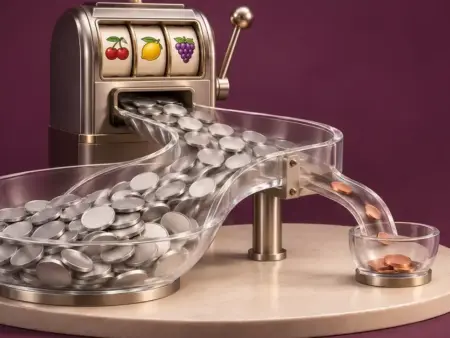
By contrast, the house edge on pokies is baked into the machine and cannot be influenced by how you play; if that side of the maths interests you, our explainer on pokie volatility covers how variance and return-to-player work on slots.
Common mistakes beginners make
Most avoidable losses at blackjack come from a short list of errors rather than bad luck:
- Trying to hit 21 instead of beating the dealer. You only need a higher hand than the dealer, so standing on 17 against a weak dealer card is often correct even though it is nowhere near 21.
- Taking insurance or even money. Both are losing side bets over time.
- Playing a 6:5 table. The worse payout quietly triples the cost of the game; walk to a 3:2 table instead.
- Copying the dealer’s rules. “Mimicking the dealer” — always hitting to 17 and never doubling or splitting — carries a house edge of about 5.48%, roughly ten times the basic-strategy figure.
- Assuming other players’ decisions hurt you. In the long run, a stranger taking “your” card is just as likely to help as to hurt; it averages out.
- Expecting a betting system to win. Progressive staking plans like doubling after a loss do not change the underlying odds of any hand.
Where to play blackjack in New Zealand
In New Zealand, blackjack is available in person at the country’s licensed land-based casinos and online. Online, the rules and strategy are identical, with two main formats: software blackjack, where a random number generator deals the cards, and live dealer casino tables, where a real dealer runs the game over a video stream in real time. If you are new to the online side, our guide to online casinos in New Zealand explains how registration, deposits and the 2026 rules work.
New Zealand’s online casino market changed in 2026: the Online Casino Gambling Act introduced a licensing regime, and advertising unlicensed offshore casinos to New Zealanders has been prohibited since 1 May 2026. In practice that means checking that any site you use holds the appropriate New Zealand licence before you deposit. It is also worth understanding that blackjack usually contributes little or nothing toward the wagering requirements on bonus money — many offers exclude table games entirely — which our overview of casino bonuses and wagering sets out in detail. Live blackjack also sits alongside the live casino game shows that many sites now stream, though those are games of pure chance rather than skill.
Important information and responsible gambling
This article explains the rules and odds of blackjack for information only. It is not advice to gamble, and no strategy, system or practice play can turn blackjack into a reliable way to make money — the house keeps a mathematical edge on every hand over time. Only ever play with money you can afford to lose, set limits before you start, and treat any winnings as a bonus rather than income. You must be 18 or over to gamble in New Zealand.
If gambling is causing harm to you or someone you know, free and confidential help is available 24/7 from Gambling Helpline Aotearoa on 0800 654 655, part of the Safer Gambling Aotearoa campaign. Gambling in New Zealand is regulated by the Department of Internal Affairs.
Sources
Frequently Asked Questions (FAQ)
Is blackjack a game of skill or luck?
It is both. The cards you are dealt are pure chance, but your decisions change the odds more than in almost any other casino game. Following basic strategy cuts the house edge to around half a percent, while guessing can give up several percent — so skill does not remove luck, it reduces how much the luck costs you.
Can you count cards playing online blackjack?
Not usefully. Software blackjack reshuffles a fresh virtual deck for every hand, so there is no running count to track. Live dealer blackjack uses real cards, but the shoe is reshuffled frequently and penetration is shallow, which removes most of the advantage card counting relies on. Counting is a physical-casino technique, and casinos are entitled to refuse service to players they identify as counters.
What is the difference between European and American blackjack?
The main difference is the dealer’s hole card. In American blackjack the dealer takes a face-down card and checks it for a blackjack before players act. In European blackjack the dealer takes only one card at the start and draws the second after players finish, so you can lose a split or double stake to a dealer blackjack you could not have seen coming. European rules therefore carry a slightly higher house edge.
Does the number of decks change my odds?
Yes, slightly. Fewer decks favour the player: a single-deck game can be worth roughly half a percent more to you than an eight-deck game with otherwise identical rules. In practice, though, single-deck tables often offset this advantage with a worse 6:5 blackjack payout, so always check the payout before assuming fewer decks is a better deal.