Lucky Days Casino (styled LuckyDays) is an offshore online casino brand that first launched in 2019 and has since accepted players from several markets, including New Zealand. This guide explains, in plain terms, what the platform is, who operates it, how it is licensed, and — most importantly for Kiwis — how New Zealand’s new online casino law, which came into force in 2026, changes the picture. The information below is factual and neutral: it is not a recommendation to register or deposit, and it does not promise winnings. Gambling always carries financial risk, and the numbers quoted by different review sites vary a great deal, so treat any bonus or game-count claim as a snapshot that can change at any time.
What Is Lucky Days Casino?
Lucky Days Casino is a browser-based online casino that groups thousands of slot machines (called “pokies” in New Zealand), table games and live-dealer tables from many different software studios under a single account. There is no app to download from an app store; the site loads inside a normal web browser on a computer or phone. Like most international casino brands, it is operated by a company registered offshore rather than in New Zealand, and it has expanded into regulated markets such as the Canadian province of Ontario over time.
Because it is an offshore operator, the key questions for a New Zealand reader are not about screen design but about who is accountable for the site, which regulator oversees it, and whether it is allowed to serve New Zealanders under the country’s current rules. The quick-facts box below summarises what independent sources report; the sections that follow explain each point and flag where sources disagree.
Quick Facts
| Field | Detail (as reported by third-party sources) |
|---|---|
| Brand | Lucky Days Casino (LuckyDays) |
| Launched | 2019 |
| Operator (reported) | Raging Rhino NV / LuckyDays N.V. — sources differ |
| Primary licence | Curaçao (direct licensing under the Gaming Control Board since the 2024 LOK reforms) |
| Other authorisations | Kahnawake; Ontario via AGCO (L7 Entertainment Limited) |
| New Zealand licence | No public evidence of a DIA licence — verify on the official register |
| Game library (reported) | Varies widely by source and region (~2,000 to 6,000+) |
| Currencies | Multiple, including NZD per reviews |
| Access | Browser-based; no app-store download |
Who operates Lucky Days and under what licence?
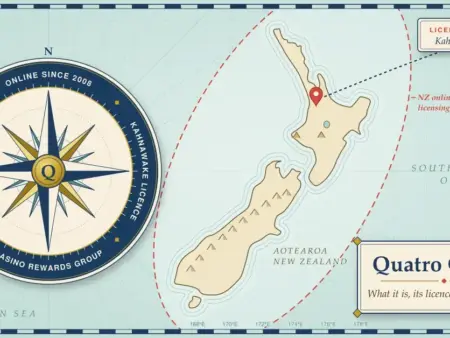
Reports on the operator are not fully consistent, so it is worth being precise. Several review sites name Raging Rhino NV, a company registered in Willemstad, Curaçao, as the operator, licensed by Curaçao; others list the owner as LuckyDays N.V. and cite a different Curaçao licence number. For its regulated Canadian operations the brand runs as luckydays.ca under an Alcohol and Gaming Commission of Ontario (AGCO) authorisation, with the Malta-registered company L7 Entertainment Limited named as the licence holder. The brand has also been associated with a Kahnawake Gaming Commission licence. None of these are New Zealand licences.
One structural change matters here. Curaçao historically ran a “master-licence” system in which a handful of holders issued sub-licences to operators. That system was abolished under Curaçao’s National Ordinance on Games of Chance (the LOK), which took effect in December 2024. Operators now apply directly to the Curaçao Gaming Control Board. Any older reference to a “Curacao Gaming Commission” sub-licence reflects the previous framework, not the current one.
How New Zealand’s 2026 Online Casino Rules Affect Lucky Days
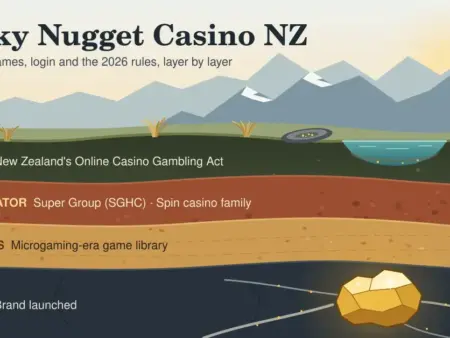
New Zealand’s online casino rules changed fundamentally in 2026, and this is the single most important thing for a Kiwi reader to understand before thinking about any offshore casino. The country has moved from having no domestic online-casino framework to a licensed regime run by the Department of Internal Affairs (DIA).
Was it legal to play at offshore casinos before 2026?
Before the new law, New Zealand’s main gambling statute was the Gambling Act 2003. It prohibited businesses from running online casinos inside New Zealand, but it did not criminalise an individual adult for choosing to play on a website hosted overseas. That gap is why offshore brands such as Lucky Days were able to accept Kiwi players, and why older guides described offshore play as simply “legal”. That description is now incomplete.
What changed under the Online Casino Gambling Act 2026?
The Online Casino Gambling Act 2026 created a licensing system and took effect on 1 May 2026, with supporting regulations following in July 2026. In broad terms, the regime works as follows:
- A capped number of licences. Up to 15 online casino licences are available. Each licence covers a single brand, and no operator may hold more than three.
- A competitive award process. The DIA ran an expression-of-interest stage over mid-2026, followed by an auction, with full applications assessed thereafter. Eligibility checks cover compliance history, criminal records involving dishonesty, and access to capital.
- A hard cut-off for unlicensed sites. From 1 December 2026, a provider that has not applied for a licence must stop offering online casino gambling to New Zealanders.
- An advertising prohibition. Advertising online casino gambling to New Zealanders without the proper licence has been prohibited since the Act took effect. The DIA can issue take-down notices and seek penalties reported to reach up to NZ$5 million for unlawful advertising.
This is why reputable New Zealand-facing publishers no longer publish ranked “best bonus” lists for unlicensed offshore casinos: doing so can amount to prohibited advertising, not merely an editorial choice.
Does Lucky Days hold a New Zealand licence?
There is no public evidence that Lucky Days Casino holds a New Zealand online casino licence. Its known authorisations are offshore (Curaçao, Kahnawake) and provincial Canadian (Ontario), none of which apply in New Zealand. Because the DIA’s licensing process was still being worked through in late 2026, the only reliable way to confirm any operator’s New Zealand status is to check the DIA’s official register directly rather than relying on a casino’s own marketing. Until a brand appears on that register, a cautious reader should treat it as unlicensed in New Zealand. For context on the wider market, see our overview of online casinos for New Zealand players.
Key Points
- Lucky Days is an offshore brand launched in 2019, not a New Zealand-licensed operator.
- New Zealand’s Online Casino Gambling Act 2026 (in force 1 May 2026) created a DIA licensing regime; unlicensed sites must stop serving Kiwis from 1 December 2026.
- Advertising unlicensed online casinos to New Zealanders is prohibited, with penalties reported up to NZ$5 million.
- Operator and licence details vary between sources — confirm current status on the DIA register before acting.
- Game counts and bonus terms quoted online differ by source and region; treat them as snapshots, not guarantees.
- Free, confidential help is available via the Gambling Helpline (0800 654 655) and Safer Gambling Aotearoa.
Games and Software Providers
Lucky Days aggregates games from many studios rather than building its own, which is standard for a multi-provider casino. Review sites consistently name suppliers such as Pragmatic Play, Evolution, NetEnt, Play’n GO, Microgaming and Yggdrasil, with dozens of smaller studios alongside them. The catalogue is typically organised into categories to make a large library navigable:
- Pokies (video slots): the largest category, spanning classic three-reel machines and modern high-feature titles with free-spin rounds and bonus mechanics.
- Jackpot games: including networked progressive jackpots whose prize pools build across many casinos.
- Table games: software (RNG-driven) versions of blackjack, roulette and baccarat with set betting limits.
- Live casino: streamed tables hosted by real dealers, covered in the next section.
- Video poker and specialty games: card-based titles with published pay tables.
How many games does Lucky Days have?
The honest answer is that the figure varies by source and by region, so no single number should be treated as definitive. New Zealand-facing reviews have quoted totals around 2,000, while other reviews cite 3,200, 4,500 or “6,000+”. The differences reflect when the count was taken, which market the reviewer looked at, and whether live tables and variants are counted separately. The practical takeaway is that the library is large and multi-provider; the exact tally is not a meaningful point of comparison between big casino brands.
What does pokie volatility mean?
Volatility (sometimes called variance) describes how a game’s wins are distributed over time, and understanding it helps set realistic expectations. High-volatility pokies pay out less often but can produce larger individual wins, which also means longer losing stretches and a faster-draining balance. Low-volatility pokies pay smaller amounts more frequently, which tends to keep a balance steadier for longer. Volatility does not change the fact that the house holds a built-in mathematical edge, and no choice of volatility, “strategy” or demo play improves the long-run odds — outcomes on certified games are random.
Live Dealer Games
Live dealer games stream a real human dealer from a studio in real time, with players placing bets through an on-screen interface. Lucky Days typically sources these from established suppliers such as Evolution and Pragmatic Play Live, covering live blackjack, roulette, baccarat and television-style “game shows”. The appeal is the social, real-time atmosphere rather than any difference in odds; betting limits range from low stakes to high-roller tables. If you want to understand the format in general before trying it anywhere, our explainer on live casino games walks through how the streams and betting windows work.
Welcome Bonus and Wagering Requirements
Lucky Days has historically advertised a multi-tier welcome bonus that spreads matched bonus money and free spins across a player’s first few deposits. Exact percentages, caps, minimum deposits and free-spin counts differ by market and change frequently, and — given New Zealand’s 2026 advertising rules — this guide does not reproduce a specific current offer as a selling point. What matters more is understanding the terms attached to any casino bonus so you can judge its real value.
The most important term is the wagering requirement (also called a playthrough). This is the number of times you must bet the bonus — and often the deposit as well — before any winnings become withdrawable. A “30x” requirement applied to both deposit and bonus means the combined amount must be wagered 30 times, which is a far higher hurdle than it first appears. Other common conditions include maximum-bet caps while a bonus is active, time limits for clearing it, and “game weighting” (pokies usually count 100% toward the requirement while table games count much less or nothing).
How welcome bonuses and wagering requirements work
A bonus is not free cash; it is credit with strings attached, and reading those strings is essential. Before accepting any offer, check the wagering multiplier and whether it applies to the deposit too, the maximum bet allowed during play, which games contribute, and the expiry window. If any single rule does not suit how you play, declining the bonus and playing with cash is often the clearer choice. For a fuller, neutral breakdown of these mechanics, see our guide to how casino welcome bonuses and wagering work.
Cash balance vs bonus balance
Many casinos, including Lucky Days, split your account into a cash balance and a bonus balance so you can see which funds are yours outright. Your own deposited cash is generally withdrawable at any time, but withdrawing while a bonus is still active usually forfeits the remaining bonus credit and any winnings tied to it. Keeping an eye on that split helps you avoid cancelling a bonus by accident.
Logging In and Account Security
Logging in to Lucky Days uses a standard email-and-password gateway, protected by transport encryption (TLS/SSL) that scrambles data between your device and the site. The login screen is the same across desktop and mobile browsers, and a forgotten-password link sends a reset to your registered email address. Older guides referring to “128-bit SSL” describe an ageing standard; modern casinos use current TLS encryption.
Whatever casino you use, basic account hygiene reduces risk: choose a long, unique password, enable any two-factor authentication offered, avoid logging in over public Wi-Fi, and never share credentials. Treat unexpected password-reset emails you did not request as a warning sign and contact support rather than clicking through.
Payments, Withdrawals and Verification
Lucky Days has supported a mix of mainstream and digital payment methods, and reviews indicate it can handle New Zealand dollars so players avoid currency-conversion costs. Reported options have included:
- Cards: Visa and Mastercard for fast deposits.
- E-wallets: digital wallets such as Skrill and Neteller, which often process withdrawals quickly once your identity is verified.
- Bank transfer: suitable for larger amounts but slower to clear.
- Cryptocurrency: some reviews list Bitcoin and other tokens, though availability changes and crypto adds its own volatility and verification considerations.
Deposits are generally instant, while withdrawals pass through an internal review before release, so the method you choose affects how fast you actually receive funds. If payout speed is a priority for you, our round-up of the fastest-paying casinos explains what drives the delays and what realistic timeframes look like.
Identity verification (KYC)
Know Your Customer (KYC) verification is a legal anti-money-laundering requirement, not an optional step, and it is best completed early. A casino will ask for clear copies of photo identification (such as a passport or driver licence), proof of address (a recent utility bill or bank statement, usually dated within three months), and sometimes proof of the payment method used. Blurry, cropped or outdated documents are the most common cause of withdrawal delays, so submitting clean copies the first time keeps things moving.
Playing on Mobile
Lucky Days runs through the mobile browser rather than a downloaded app, so it works on both iOS and Android without an app-store install. The lobby, cashier and account tools scale to smaller screens, and your balance and login are shared with the desktop version. Streaming live tables and running graphics-heavy pokies uses more battery and mobile data, so a stable Wi-Fi connection and a charged device make for a smoother session.
Customer Support
Support is typically offered through 24/7 live chat for quick questions and email for anything that needs documents attached or a written record, backed by an on-site help section. Response quality and speed vary over time and are hard to verify independently, so treat support availability as a feature to test with a simple query before committing funds, rather than as a guarantee.
Who Is Lucky Days For, and Common Mistakes to Avoid
On paper, Lucky Days suits players who want a large multi-provider library and a no-download, browser-first experience. For New Zealanders specifically, however, the 2026 licensing situation is the decisive factor: an offshore brand that is not licensed by the DIA sits outside New Zealand’s consumer-protection framework, which affects where you can turn if a dispute arises. That trade-off deserves more weight than any bonus headline.
Common mistakes players make
- Assuming offshore equals licensed in New Zealand. A Curaçao or Ontario licence does not mean a site is licensed to serve New Zealanders under the 2026 Act — always check the DIA register.
- Treating a bonus as free money. Wagering requirements, max-bet caps and expiry dates can make a headline offer far less valuable than it looks.
- Skipping verification until withdrawal time. Leaving KYC until you want to cash out is the most common cause of frustrating delays.
- Chasing losses. Increasing bets to recover a losing run is the fastest route to gambling harm; the house edge does not reverse.
- Ignoring deposit and time limits. Not setting limits at sign-up makes it harder to keep spending within a planned budget.
Disclaimer
This article is general information, not legal, financial or gambling advice. Gambling involves real financial risk, outcomes on licensed games are random, and no strategy, demo play or bonus improves your long-term chances. You must be 18 or older to gamble in New Zealand. The legal status of offshore operators is changing under the Online Casino Gambling Act 2026; confirm any operator’s licence directly with the Department of Internal Affairs before you act. If gambling is affecting you or someone you know, free and confidential help is available in New Zealand from the Gambling Helpline on 0800 654 655 (or text 8006) and through Safer Gambling Aotearoa. You can also set deposit, loss and time limits, or self-exclude, using a casino’s own responsible gambling tools.
Sources
- Department of Internal Affairs (DIA) — New Zealand
- MinterEllison — Licence to operate: New Zealand’s Online Casino Gambling Act 2026
- Russell McVeagh — DIA guidance on Online Casino Gambling Act implementation
- Gambling.com — New Zealand online casino licence auction
- Gambling.com — Lucky Days Casino (brand facts)
- Curaçao Gaming Control Board
- Gambling Helpline Aotearoa
- Health New Zealand — Safer Gambling Aotearoa
Frequently Asked Questions (FAQ)
Is Lucky Days Casino legal to use in New Zealand in 2026?
The law changed in 2026. Under the Online Casino Gambling Act 2026, operators need a New Zealand licence to offer online casino gambling to New Zealanders, and from 1 December 2026 providers that have not applied for one must stop serving the New Zealand market. Advertising unlicensed online casinos to New Zealanders is also prohibited. There is no evidence Lucky Days holds a New Zealand licence, so a cautious reader should treat it as outside the new regulated system.
Does Lucky Days Casino hold a New Zealand licence?
There is no public indication that Lucky Days holds a licence issued by the Department of Internal Affairs. Its known authorisations are offshore and provincial Canadian, which do not apply in New Zealand. The only reliable confirmation is the DIA’s official register, so check that directly rather than relying on a casino’s own claims.
What licence does Lucky Days Casino operate under?
Sources most often cite a Curaçao licence, with the operator reported variously as Raging Rhino NV or LuckyDays N.V., plus a Kahnawake licence and, for Ontario, an AGCO authorisation held by L7 Entertainment Limited. Curaçao’s old master-licence system was replaced by direct licensing under the Gaming Control Board from December 2024, so any reference to a Curaçao sub-licence describes the former structure.
How do wagering requirements on a welcome bonus work?
A wagering requirement is how many times you must bet bonus funds — and often your deposit as well — before winnings can be withdrawn. A 30x requirement on deposit plus bonus means the combined total must be wagered 30 times. Maximum-bet caps, game weighting and expiry dates also apply, so a bonus is credit with conditions, not free cash.
Where can New Zealanders get free help for gambling harm?
Free, confidential support is available around the clock from the Gambling Helpline on 0800 654 655, with a text option to 8006 and specialist Māori, Pasifika and youth lines. The government’s Safer Gambling Aotearoa programme, run by Health New Zealand, offers further information and tools. Setting deposit and time limits, or self-excluding, are practical first steps if gambling stops feeling fun.