Casino Rewards is one of the longest-running cross-brand loyalty groups in online gambling, linking dozens of separate casino websites to a single shared points-and-tiers system. For years its brands were heavily marketed to New Zealanders, but the picture changed sharply in 2026. This guide explains what the network is, how its pooled VIP scheme and sister sites actually worked, which brands belonged to it, and — most importantly — its current status in New Zealand, where it stopped accepting new registrations at the end of April 2026 and now sits outside the country’s new licensing regime. Everything below is written as a neutral reference, not a recommendation to sign up.
Key facts
- What it is: a cross-brand online casino loyalty group linking 25+ separately themed sites to one shared VIP account.
- Software: built on Microgaming games, including progressive-jackpot networks such as Mega Moolah.
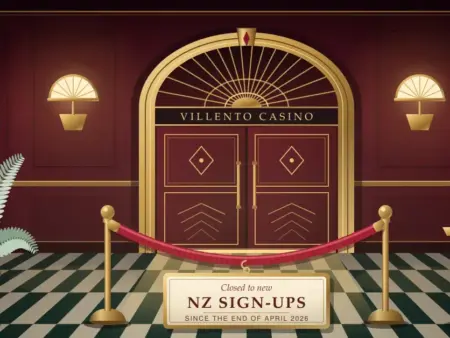
- NZ status: closed to new New Zealand registrations at the end of April 2026.
- Legal context: New Zealand’s Online Casino Gambling Act 2026 took effect on 1 May 2026; only licensed operators may serve or advertise to Kiwi players.
- Key caution: loyalty tiers reward volume of play, not better odds; this guide does not rank brands or link to sign-up pages.
What is the Casino Rewards network?
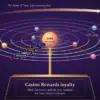
Casino Rewards is a loyalty group that connects many independently branded online casinos to one central rewards engine. Launched in the early 2000s, it was built around software from Microgaming, one of the first companies to supply online casino games. Each brand ran its own website, theme and sign-up path, but they all reported loyalty activity back to a shared database, so a player’s points and status level followed them from one brand to another.
The appeal the group promoted was consolidation: instead of earning separate, isolated rewards at every casino, a member accumulated value in a single profile. That is the feature that made the group well known, and it is also what distinguishes this topic from a pure review of any one brand. If you want the mechanics of the points scheme itself, see our separate explainer on the Casino Rewards loyalty programme; this article focuses on the network as a whole and its New Zealand position.
Can New Zealanders still join Casino Rewards sites?
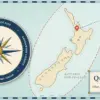
No. According to the information held on this site, the Casino Rewards network closed to new New Zealand registrations at the end of April 2026. That timing lines up with a major change in New Zealand law: the licensed online casino framework in New Zealand took effect on 1 May 2026, and operators that do not hold a New Zealand licence are no longer permitted to take on or advertise to Kiwi customers in the way they once did.
In practice this means the welcome offers, deposit prompts and “join now” paths that older guides describe are not an accurate reflection of what a New Zealand reader can access today. The sections below describe how the network operated historically and why its NZ availability ended, rather than steering anyone toward an account.
Network snapshot
| Detail | Information |
|---|---|
| Type | Cross-brand loyalty network of online casinos |
| Launched | Early 2000s |
| Game software | Microgaming |
| Loyalty model | Pooled VIP points and shared status tiers across all brands |
| Example member brands | Zodiac, Grand Mondial, Captain Cooks, Luxury, Casino Classic, Golden Tiger, Yukon Gold, Casino Kingdom, Quatro, Villento |
| New Zealand status (2026) | Closed to new NZ registrations since the end of April 2026 |
| NZ regulator | Department of Internal Affairs (Online Casino Gambling Act 2026) |
| Minimum age in NZ | 18+ |
What New Zealand’s Online Casino Gambling Act 2026 means
New Zealand’s Online Casino Gambling Act 2026 created the country’s first licensing system for online casino play, and it is the single most important fact for anyone researching offshore brands today. The Act commenced on 1 May 2026, with the accompanying Online Casino Gambling Regulations taking effect from 3 July 2026. Crucially, it applies extraterritorially: any operator that lets a person based in New Zealand play needs a New Zealand licence, no matter where the company itself is located.
Licensing and the 15-licence cap
The Department of Internal Affairs (DIA) administers the regime and may issue up to 15 licences, each lasting three years and renewable once for a further five. The process runs in stages — an expression-of-interest round, a competitive auction, and then full licence applications — with a staged market launch planned around the end of 2026. Transitional arrangements allow some existing offshore providers a limited window before they must stop serving New Zealanders, but new entrants are prohibited from signing up Kiwi customers in the meantime.
Why ranked bonus lists and operator links are no longer published
Advertising online casino gambling to New Zealanders is now limited to licensed operators, and advertising unlicensed offshore casinos has been prohibited since 1 May 2026. That is the legal reason this guide does not rank Casino Rewards brands, publish current bonus codes, or link out to their sign-up pages. The Act also bans affiliate marketing, celebrity endorsements and sponsorship for licensed operators, and forbids presenting gambling as an investment or a way to make money. A factual explainer like this one is allowed; a promotional funnel is not.
How the Casino Rewards loyalty system worked
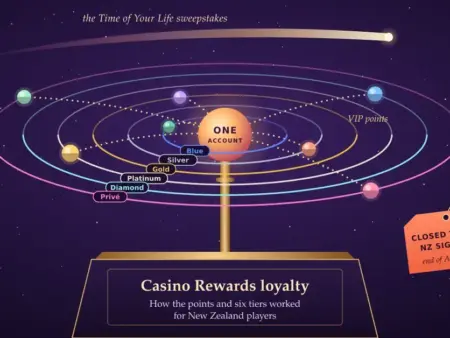
The loyalty system was the network’s defining feature, pooling activity from every connected brand into one account. Historically, players earned loyalty points as they wagered, and those points sat in a single central ledger rather than being tied to one casino. Because the points did not reset when a player moved between brands, the group marketed it as a way to build long-term value across the whole ecosystem.
Pooled points and status tiers
The group used a multi-level VIP structure in which members climbed through status tiers based on how much they played. A higher tier historically unlocked perks such as faster point conversion, birthday gifts and priority support, and — because status was shared — a level reached on one brand applied when logging into another. The group also ran periodic prize draws for higher-tier members. None of this changes the odds of any individual game: loyalty schemes reward volume of play, they do not improve the mathematical return of a slot or table game.
The sister-site structure explained
“Sister sites” are separate casino brands run by the same parent operator on shared technology and financial plumbing. Within Casino Rewards the link was unusually tight compared with typical white-label arrangements: the brands shared not only an operator but a single loyalty database, so opening an account on one site effectively placed a player inside the group-wide tier system rather than at an isolated casino.
The practical consequence was consistency. A player’s status level, point balance and verification records were recognised across the group. That design is why reviewers often describe brands such as Zodiac Casino and Grand Mondial as near-identical under the surface — the themes and welcome structures differed, but the engine behind them was the same.
Which brands belonged to the Casino Rewards network
The network spanned more than 25 individually themed casinos that all fed into the same loyalty system. The brands below are among the most widely documented members; each ran its own website and promotions while sharing the group’s software and central account.
- Zodiac Casino — an astrology-themed brand known historically for a very low minimum first deposit.
- Grand Mondial Casino — a classic, high-roller styled site.
- Captain Cooks Casino — a long-running maritime-themed brand active since the early 2000s.
- Luxury Casino — positioned around a traditional multi-tier welcome package rather than low-deposit spins.
- Casino Classic, Golden Tiger, Yukon Gold, Casino Kingdom, Quatro Casino and Villento Casino — further themed brands sharing the same group infrastructure.
Because advertising unlicensed offshore operators to New Zealanders is now prohibited, this list is provided for reference only and does not link to any brand’s sign-up page. For context on how the Captain Cooks-style welcome structures were built, and how such offers generally work, see our neutral guide to how casino welcome bonuses work.
The software and games behind the network
The network’s games came from Microgaming, which gave every brand a largely identical lobby. The shared catalogue historically ran to hundreds of titles, including well-known multi-line pokies and progressive-jackpot networks such as Mega Moolah, alongside standard random-number-generator table games like blackjack, roulette and baccarat, plus video poker and a live-dealer section streamed from studios.
Players could typically choose between an instant-play browser version and a downloadable desktop client. The practical differences were about delivery rather than fairness — a downloaded client stored game assets locally, while browser play offered flexibility across devices. The underlying game outcomes were driven by the same audited random number generators in either case.
How deposits, withdrawals and verification worked
The brands supported New Zealand dollar accounts and common payment methods, with identity checks required before cashing out. Historically that meant card payments, e-wallets such as Skrill and Neteller, local bank options and prepaid vouchers, with deposits credited quickly and withdrawals subject to a review period. Like all regulated-market casinos, the group operated a Know Your Customer (KYC) process requiring photo ID and proof of address before releasing funds — a standard anti-money-laundering and age-verification step rather than a loyalty feature.
One point worth understanding is how licensing affects financial protection. Reputable licences require player balances to be held in segregated accounts, separate from the operator’s own funds. Where a brand holds no New Zealand licence, however, a Kiwi player has no recourse to New Zealand’s new consumer-protection regime if something goes wrong, which is a core reason the current law channels play toward locally licensed operators.
Common mistakes with loyalty networks
The most common mistake is treating a loyalty scheme as if it improves your chances of winning. It does not — rewards are a function of how much you wager, not a change to game odds, so chasing a higher tier can cost far more than the perks are worth. Other recurring pitfalls include:
- Misreading wagering requirements. Historic welcome offers across the group carried very high playthrough multiples on the first deposits, meaning bonus credits were difficult to convert to withdrawable cash.
- Assuming offshore equals protected. A foreign licence is not the same as New Zealand oversight; since 1 May 2026, only DIA-licensed operators fall under local rules.
- Relying on outdated guides. Many older articles still describe open NZ sign-ups and live bonus codes that no longer apply.
- Opening multiple sister accounts to stack bonuses. Because the network shared one profile, this rarely worked as players expected and could breach terms.
Safer alternatives and what to check in 2026
The safest position for a New Zealand reader is to wait for DIA-licensed operators and to verify any licence independently before engaging. Until the licensed market is fully live, there is no New Zealand-licensed online casino to recommend, and a foreign logo or seal is not a substitute for local authorisation. When the regime matures, look for the operator on the Department of Internal Affairs’ published list rather than trusting on-site claims.
If you are researching the wider market, use neutral, fact-checked explainers and make use of built-in responsible gambling tools such as deposit limits and self-exclusion. Treat any site that still actively solicits New Zealand sign-ups outside the licensed framework with caution.
Who the Casino Rewards network suited
Historically the network suited players who valued a single, portable loyalty profile across many brands and who favoured Microgaming’s game library. Its low-deposit entry points made it visible to casual players, while its tier system was aimed at regulars. For New Zealanders in 2026, though, that profile is largely academic: with NZ registrations closed since late April 2026 and advertising of unlicensed offshore casinos prohibited, the network is best understood as a piece of online-gambling history and a case study in how cross-brand loyalty groups work — not as a current option.
Disclaimer
This article is for general information only. It is not gambling advice or encouragement to gamble, and it does not promote any operator. Gambling carries financial risk; no loyalty scheme, strategy or demo play changes the odds of a game. Online casino gambling in New Zealand is regulated under the Online Casino Gambling Act 2026, administered by the Department of Internal Affairs, and is restricted to those aged 18 and over. If gambling is affecting you or someone you know, free and confidential help is available in New Zealand from the Gambling Helpline on 0800 654 655.
Sources
Frequently Asked Questions (FAQ)
Can New Zealanders still sign up to Casino Rewards sites?
No. The Casino Rewards network closed to new New Zealand registrations at the end of April 2026, around the time New Zealand’s Online Casino Gambling Act 2026 took effect. The brands are no longer lawfully marketed to Kiwi players, which is why this guide does not link to any sign-up page.
What was the Casino Rewards network?
It is a long-running loyalty group that connected many separately branded online casinos — such as Zodiac, Grand Mondial and Captain Cooks — to a single shared VIP points and status system, all built on Microgaming software. Points and tier status followed the player across every brand in the group.
Does the Online Casino Gambling Act 2026 apply to offshore casinos?
Yes. The Act applies extraterritorially, so any operator that enables a New Zealand-based person to play needs a New Zealand licence regardless of where the company is based. Only licensed operators may serve or advertise to New Zealanders, and the Department of Internal Affairs may issue up to 15 licences.
Did the loyalty scheme improve the chances of winning?
No. Loyalty points and VIP tiers reward how much a person wagers; they do not change the mathematical return or random outcomes of any game. Chasing a higher tier generally costs more than the perks are worth and does not affect the odds.
Is there a New Zealand-licensed online casino to use instead?
Not yet in a settled form. The licensed market was being established through a staged process during 2026, so the safest approach is to wait for operators on the Department of Internal Affairs’ licensed list and to verify any licence independently before engaging.