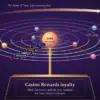
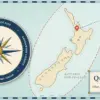
Jackpot City is one of the longest-running online casino brands marketed to New Zealand players, and it sits inside a wider family of “sister sites” — separate casino brands that share an operator, a software platform or a loyalty back-end. This guide explains in plain terms what that network actually is, who runs it today, how shared accounts and rewards are supposed to work, and — crucially — how New Zealand’s new 2026 online casino law changes the picture for Kiwi players. It is an independent, factual overview rather than a promotion: nothing here is a recommendation to sign up, and the bonus figures operators advertise change constantly and are now tightly restricted by NZ law.
Key Points
- Jackpot City is part of Super Group (SGHC), a Guernsey-based, NYSE-listed company; its directly connected stablemate is Spin Casino.
- Classic brands share a software heritage, not always an owner. Ruby Fortune, Royal Vegas, Gaming Club and Lucky Nugget come from the same Microgaming/Games Global family, but ownership attributions vary.
- The software is Games Global. Microgaming sold its game catalogue and progressive network (including Mega Moolah) to Games Global in May 2022.
- NZ’s 2026 law changed everything. The Online Casino Gambling Act 2026 (in force 1 May 2026) creates a capped, DIA-licensed market opening 1 December 2026; advertising by unlicensed operators is banned.
- Verify, don’t assume. Pooled points, shared KYC and bonus figures only apply where a brand’s own terms say so — and advertised numbers change.
What “sister sites” actually means
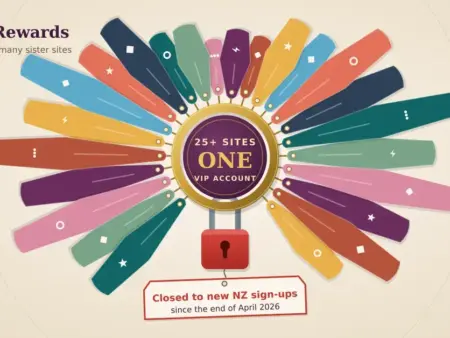
Sister sites are separate casino brands that are connected behind the scenes — usually by a common owner, a shared technical platform, or a single customer-account and payments system. From the outside they look like different casinos, with their own names, colours and promotions. Underneath, they may run on the same software, use the same cashier, and in some cases feed into a shared loyalty programme.
Grouping brands this way is standard practice in the online gambling industry. For a company it spreads marketing across several identities; for a player it means the “different” casino you are about to join may be run by people you have already dealt with, under the same terms and the same support desk. Knowing the real structure behind a brand is therefore more useful than comparing logos. The same idea appears across the market — for example in our look at Wildz casino sister sites — and it applies squarely to Jackpot City.
Who operates Jackpot City today
Jackpot City is part of Super Group (SGHC) Limited, a Guernsey-based holding company listed on the New York Stock Exchange. Super Group reports its business in segments, and its multi-brand online casino arm — called “Spin” — is the home of Jackpot City alongside Spin Casino and several bingo brands. Super Group’s other well-known segment is the Betway sportsbook. This is the clearest, most current ownership link, and it is the one to rely on.
The operating entities named in Jackpot City’s own terms and licences have varied over time and by market, and older articles still name companies such as Digimedia Ltd, Bayton Ltd or Baytree (Alderney) Limited. Treat those as historical or market-specific operating names rather than the current corporate parent. Licences commonly cited for the brand include the Malta Gaming Authority and the Kahnawake Gaming Commission; the exact entity, licence number and governing law appear in the footer and terms of whichever version of the site is shown to you, so that is the authoritative place to check.
Where the games come from
Jackpot City built its reputation on Microgaming’s catalogue, including the Mega Moolah progressive jackpot network. That is why many guides still describe it as “Microgaming-powered.” The important update is that Microgaming sold its game-distribution business, portfolio and progressive network to Games Global in May 2022. The same titles live on, but you may now see them credited to Games Global rather than Microgaming, and Games Global supplies hundreds of other casino brands too. In short, the content heritage is real, but the “Microgaming” label is now partly a historical one.
Quick Facts
| Flagship brand | Jackpot City |
|---|---|
| Parent group | Super Group (SGHC) Limited, Guernsey (NYSE: SGHC), “Spin” casino segment |
| Directly linked brand | Spin Casino (plus bingo brands in the same segment) |
| Operating entities cited over time | e.g. Bayton Ltd / Baytree (Alderney) Limited / Digimedia Ltd (verify in the current terms) |
| Licences commonly cited | Malta Gaming Authority; Kahnawake Gaming Commission |
| Software | Games Global (formerly Microgaming), incl. the Mega Moolah progressive network |
| Currency for NZ players | New Zealand Dollar (NZD) support |
| NZ legal status | Subject to the Online Casino Gambling Act 2026; DIA-licensed market opens 1 December 2026 |
| Age limit | 18+ |
Which brands are linked to Jackpot City
The confirmed, current stablemate is Spin Casino, which sits in the same Super Group “Spin” segment. Beyond that, a cluster of classic brands — Ruby Fortune, Royal Vegas, Gaming Club, Lucky Nugget, All Slots, Vegas Palms, 7 Sultans and Mummys Gold — have long shared the same Microgaming/Games Global software family and were historically marketed together under names such as the Fortune Lounge and Digimedia groups. Ownership and operating attributions for these older brands have shifted over the years, so it is accurate to describe them as sharing a software heritage rather than to claim they are all run by the identical company today.
The practical takeaway: do not assume your loyalty status, bonuses or verified identity automatically transfer between every brand in the table below. Shared back-ends exist in parts of the industry, but they are not guaranteed across all of these names. Always read each site’s own terms.
| Brand | How it is linked | Notes for NZ readers |
|---|---|---|
| Spin Casino | Same Super Group “Spin” segment as Jackpot City | The most directly connected brand; slots-led with a Games Global catalogue. |
| Ruby Fortune | Historic Microgaming/Fortune Lounge cluster | Long-established brand; check current operator and licence in its terms. |
| Royal Vegas | Historic Microgaming/Fortune Lounge cluster | Classic “land-based” styling; shares the software heritage, not a confirmed common owner. |
| Gaming Club | Historic Microgaming brand (one of the oldest, from 1994) | Pioneer brand; verify who runs the NZ-facing version today. |
| Lucky Nugget | Historic Microgaming brand (from 1998) | Gold-rush theme aimed at casual players; see our separate Lucky Nugget overview. |
New Zealand’s 2026 online casino law and why it matters
New Zealand’s rules for online casinos changed fundamentally in 2026, and any guide that only cites the Gambling Act 2003 is out of date. The Online Casino Gambling Act 2026 received Royal Assent on 27 April 2026 and came into force on 1 May 2026. It creates a licensed online casino market for the first time, administered by the Department of Internal Affairs (DIA).
Under the new regime the number of licences is capped (reported at 15), allocated by auction, with the regulated market due to open on 1 December 2026. The Act applies extraterritorially, meaning it reaches any online casino operator enabling play from within New Zealand, wherever that company is incorporated. From the market’s opening, only DIA-licensed operators may lawfully offer online casino gambling to people in New Zealand.
The change that most affects guides like this one is advertising. Advertising by unlicensed operators to New Zealanders is prohibited, the DIA can issue takedown notices, and penalties for unlawful gambling advertising run to as much as NZ$5 million — and can fall on publishers, not just operators. That is the core reason a responsible New Zealand site presents casino networks neutrally and does not publish ranked offers or “claim this bonus” calls to action. For general context on how operators present offers, see our explainer on how casino bonuses work in New Zealand and our overview of online casinos in NZ.
Are winnings taxed in New Zealand?
For recreational players, gambling winnings in New Zealand are generally not taxed, because casual gambling is treated as a windfall rather than income. The picture can differ for someone whose gambling is effectively run as a business or profession, where Inland Revenue may take a different view. If your situation is anything other than ordinary recreational play, check directly with Inland Revenue rather than relying on a casino’s marketing.
How group loyalty and shared accounts are meant to work
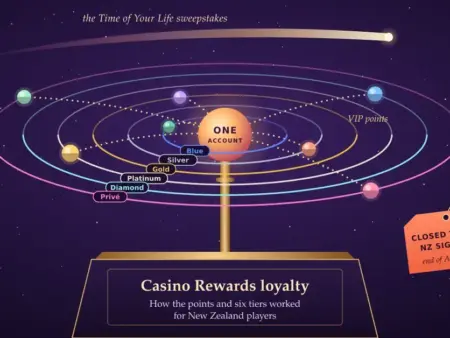
The appeal of a casino network is continuity: in theory, status and rewards you build at one brand follow you to another. Where a genuine shared back-end exists, that can mean a single customer profile, pooled loyalty points and quicker identity checks when you open a second brand in the same group.
In practice, treat these as features to verify, not guarantees. Points pooling, VIP tier transfer and shared Know Your Customer (KYC) records only apply where the operator actually runs the brands on one system and says so in its terms. Different brands in a loose historical “family” may have entirely separate accounts, wallets and promotions. Never move money or chase a bonus on the assumption that two sites are joined — confirm it first.
Welcome offers and wagering terms: what to check
Welcome offers across these brands have typically combined a deposit match with bonus spins, sometimes behind low “$1” entry points. The headline numbers change often, and under the 2026 advertising rules they cannot lawfully be promoted to NZ players by unlicensed operators, so this guide describes how such offers work rather than listing current amounts.
The single most important figure in any offer is the wagering requirement — how many times you must bet the bonus (and sometimes the deposit) before you can withdraw. A very low-cost entry offer often carries a very high multiplier (figures around 50x–200x have been advertised in this part of the market), which means the “free” play is extended entertainment rather than easy cash. Other terms matter just as much: game weighting (slots usually count 100%, table games far less), maximum bet while a bonus is active, time limits, and maximum cashout caps on winnings. Our guides to Jackpot City bonuses and Jackpot City withdrawals go into the brand’s own terms in more detail.
Alternatives to the Jackpot City network
Many players look beyond a single network for a wider multi-provider game library, different promotions or simpler wagering rules. The brands below are covered neutrally elsewhere on this site; the links go to our own independent overviews rather than to operators, and inclusion is not an endorsement. Always confirm a casino’s current New Zealand licensing status before depositing.
| Casino | Known for | Our overview |
|---|---|---|
| Jonny Jackpot | Clean, modern design with a broad multi-studio catalogue | Jonny Jackpot review |
| Just Casino | Very large aggregated game library and crypto options | Just Casino review |
| King Billy | Themed, award-winning interface and a big slots range | King Billy overview |
| Lucky Days | Minimalist, mobile-first layout | Lucky Days overview |
| PlayOJO | Wager-free approach to bonuses and winnings | PlayOJO wager-free review |
Banking, verification and withdrawals in NZD
Native New Zealand Dollar (NZD) support is the practical advantage most of these brands offer, because it avoids currency-conversion costs on deposits and withdrawals. Typical methods seen in this market include Visa and Mastercard, e-wallets such as Skrill and Neteller, local bank transfer options and prepaid vouchers such as Paysafecard. Deposits are usually instant; withdrawals go through a review before they are released.
That review is driven by Know Your Customer (KYC) and anti-money-laundering obligations. Before a first withdrawal, expect to supply photo ID (passport or driver licence), proof of address (a recent utility bill or bank statement, usually within three months) and sometimes proof of the payment method used. Uploading clear, current documents early is the simplest way to avoid payout delays. Processing times vary by operator and method, so check the specific brand’s terms rather than assuming a network-wide figure.
Playing on mobile
These casinos are built to run in a mobile browser on iOS and Android, with the lobby and account tools scaling to the screen — no download is required to play. Some operators also offer a dedicated app, which can add biometric login and push notifications but needs storage space and manual updates. The browser route gives instant access and automatic updates; the app can feel smoother for heavy use. Either way, a stable Wi-Fi connection protects your mobile data, and lowering screen brightness helps battery life during longer sessions.
Common mistakes to avoid
- Assuming all “sister” brands are joined. Only confirm pooled accounts, points or KYC where the operator’s terms actually say so. Historic “family” links are not the same as a shared system.
- Chasing the lowest entry offer. A $1 welcome deal with a very high wagering multiplier is extended play, not easy cash. Read the multiplier first.
- Ignoring licence and law. From the 2026 regime, only DIA-licensed operators may lawfully serve NZ players — check the current status before depositing.
- Skipping verification until payout time. Leaving KYC until you want to withdraw is the most common cause of delays.
- Trusting advertised figures as fixed. Bonus amounts, wagering and limits change and are not freely advertised to NZ players; treat any number as a snapshot to verify.
Disclaimer
This article is for general information only. It is not gambling, legal, financial or tax advice, and it is not an inducement to gamble. Gambling involves risk; there is no strategy, bonus or “demo” mode that improves your odds, and you should never bet more than you can afford to lose. Online casino gambling in New Zealand is restricted to adults aged 18 and over. New Zealand’s online casino rules changed under the Online Casino Gambling Act 2026, and only Department of Internal Affairs-licensed operators may lawfully offer services to NZ players as the regulated market opens — confirm an operator’s current licence before depositing. If gambling is causing you or someone you know harm, free and confidential help is available 24/7 from the Gambling Helpline on 0800 654 655 or by texting 8006, and through the Choice Not Chance / Safer Gambling Aotearoa services.
Sources
- Department of Internal Affairs (DIA)
- New Zealand Legislation — Gambling Act 2003
- GamingTechLaw — New Zealand online casino licensing 2026
- iGaming Business — Microgaming to sell Quickfire to Games Global
- Malta Gaming Authority
- Gambling Helpline Aotearoa
- Healthify NZ — gambling harm support (Choice Not Chance)
Frequently Asked Questions (FAQ)
What are Jackpot City’s sister sites?
They are casino brands connected to Jackpot City behind the scenes. The clearest current link is Spin Casino, which sits in the same Super Group “Spin” segment. A wider set of classic brands — such as Ruby Fortune, Royal Vegas, Gaming Club and Lucky Nugget — shares the same Microgaming/Games Global software heritage, though their ownership today varies, so they are best described as a software family rather than identical-owner siblings.
Who owns and operates Jackpot City now?
Jackpot City is part of Super Group (SGHC) Limited, a Guernsey-based, NYSE-listed holding company, within its Spin casino segment. The specific operating entity and licences named in the terms have changed over time and by market, with the Malta Gaming Authority and Kahnawake commonly cited. The authoritative detail is in the footer and terms of the site version shown to you.
Is it legal to play at these casinos from New Zealand?
New Zealand’s Online Casino Gambling Act 2026 came into force on 1 May 2026 and creates a licensed, DIA-administered market, with the regulated market due to open on 1 December 2026. As that regime takes effect, only DIA-licensed operators may lawfully offer online casino gambling to people in New Zealand, and advertising by unlicensed operators is banned. Always check an operator’s current NZ licence status before depositing.
Do my bonuses, points and verification transfer between the brands?
Only where the operator runs the brands on one shared system and says so in its terms. Spin Casino and Jackpot City share a group segment, but you should not assume loyalty points, VIP tiers or KYC automatically carry across every brand in the wider historical family. Confirm it in each site’s own terms before relying on it.
Are winnings taxed, and where can I get help if gambling becomes a problem?
Recreational gambling winnings in New Zealand are generally not taxed, though the position can differ for professional-scale gambling — check with Inland Revenue if unsure. If gambling is causing harm, free, confidential 24/7 support is available from the Gambling Helpline on 0800 654 655 or by texting 8006, and through Choice Not Chance and Safer Gambling Aotearoa. You can also read our responsible gambling page.